
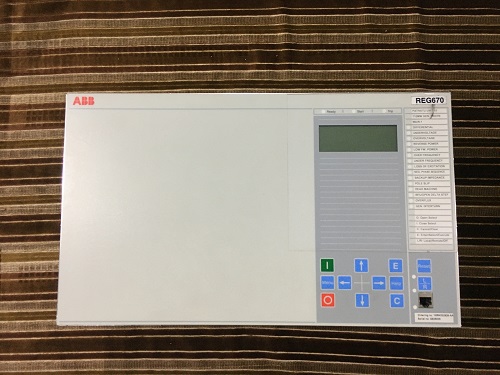
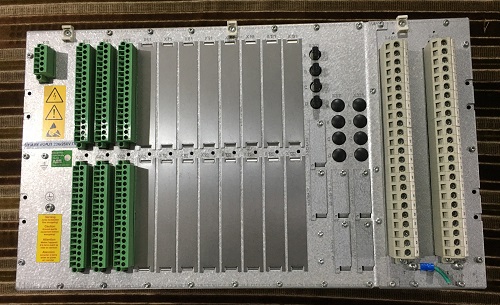
- 1. Introduction to ABB REG670
- 2. ABB REG670 Product Family and Hardware Configurations
- 3. Main Protection Functions of ABB REG670
- 4. Generator Differential Protection – ANSI 87G
- 5. Stator Earth-Fault Protection – ANSI 64S
- 6. Rotor Earth-Fault Protection – ANSI 64R
- 7. Loss-of-Excitation Protection – ANSI 40
- 8. Reverse-Power and Underpower Protection – ANSI 32 and 37
- 9. Negative-Sequence Protection – ANSI 46
- 10. Overexcitation Protection – ANSI 24
- 11. Other Important Protection Functions
- Phase Overcurrent Protection – ANSI 50/51
- Earth-Fault Overcurrent Protection – ANSI 50N/51N
- Undervoltage Protection – ANSI 27
- Overvoltage Protection – ANSI 59
- Residual Overvoltage Protection – ANSI 59N
- Thermal Overload Protection – ANSI 49
- Accidental Energization Protection – ANSI 50AE
- Circuit Breaker Failure Protection – ANSI 50BF
- Pole-Slip Protection – ANSI 78
- 12. ABB REG670 and PCM600 Engineering Software
- 13. IEC 61850 Communication in ABB REG670
- 14. Testing and Commissioning of ABB REG670
- 15. Common Problems and Troubleshooting
- 16. ABB REG670 Compared with Other ABB Generator Protection Relays
- 17. Frequently Asked Questions About ABB REG670
- 18. Conclusion
ABB REG670 Generator Protection Relay: Applications, Protection Functions, Technical Features, PCM600 Configuration and Commissioning
ABB REG670 Generator Protection Relay – Complete Technical Guide
1. Introduction to ABB REG670
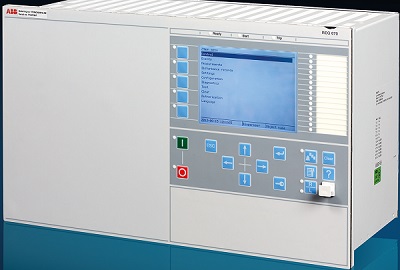
The ABB REG670 is a numerical generator protection and control intelligent electronic device (IED) belonging to ABB’s Relion 670 series. It is designed to provide comprehensive protection, monitoring and control for synchronous generators and generator-transformer units in power generation facilities.
Generator protection is one of the most important parts of electrical protection engineering. Generators are expensive and critical components of power plants, and internal electrical faults, abnormal operating conditions or failures in excitation systems can cause significant equipment damage and production losses.
The ABB REG670 provides a comprehensive protection function library covering generator differential protection, stator earth-fault protection, rotor earth-fault protection, loss-of-excitation protection, reverse-power protection, negative-sequence protection, overcurrent protection and other essential generator protection functions.
The relay can be applied in:
- Thermal power plants
- Hydroelectric power stations
- Gas turbine power plants
- Combined-cycle power plants
- Industrial power generation facilities
- Generator and step-up transformer protection systems
- Pumped-storage power plants
The REG670 supports different application configurations, allowing protection engineers to develop protection schemes according to generator ratings, plant architecture and protection philosophy.
2. ABB REG670 Product Family and Hardware Configurations
The REG670 is available in different hardware and preconfigured application arrangements.
The documented Relion 670 Version 2.2 product guide describes three main configurations:
2.1 REG670 A20
The A20 configuration is designed primarily for generator differential and backup protection.
Typical characteristics include:
- Generator differential protection
- Generator backup protection
- 12 analog inputs
- Protection and monitoring functions for generator applications
- Configurable application logic
2.2 REG670 B30
The B30 configuration provides additional analog input capacity for more extensive generator protection applications.
Typical characteristics include:
- Generator differential protection
- Backup protection
- 24 analog inputs
- Additional current and voltage measurement circuits
- Flexible protection and control engineering
2.3 REG670 C30
The C30 configuration is designed for generator and block transformer protection applications.
Typical characteristics include:
- Generator protection
- Generator-transformer unit protection
- 24 analog inputs
- Additional measurement capabilities
- Protection functions for generator and transformer applications
The actual function availability depends on the selected ordering configuration, hardware, product version and optional function packages.

3. Main Protection Functions of ABB REG670
The REG670 provides an extensive protection function library for synchronous generator applications.
Important protection functions include:
| ANSI code | Protection function | Description |
|---|---|---|
| 87G | Generator differential protection | Detects internal generator stator faults |
| 87T | Transformer differential protection | Protects generator step-up transformers when configured |
| 64S | Stator earth-fault protection | Detects stator winding earth faults |
| 64R | Rotor earth-fault protection | Detects rotor excitation circuit insulation faults |
| 40 | Loss-of-excitation protection | Detects loss or reduction of generator excitation |
| 32 | Directional overpower protection | Detects generator active power direction and operating conditions |
| 37 | Directional underpower protection | Detects underpower and motoring-related conditions |
| 46 | Negative-sequence protection | Protects against unbalanced current |
| 49 | Thermal overload protection | Protects against excessive thermal loading |
| 50/51 | Phase overcurrent protection | Provides short-circuit and backup protection |
| 50N/51N | Earth-fault overcurrent protection | Detects residual current faults |
| 24 | Overexcitation protection | Protects against excessive V/Hz |
| 27 | Undervoltage protection | Detects low voltage conditions |
| 59 | Overvoltage protection | Detects excessive voltage |
| 59N | Residual overvoltage protection | Detects earth-fault voltage conditions |
| 81 | Frequency protection | Detects abnormal frequency conditions |
| 50BF | Circuit breaker failure protection | Detects unsuccessful circuit breaker interruption |
| 78 | Pole-slip protection | Detects loss of generator synchronism |
| 50AE | Accidental energization protection | Detects inadvertent generator energization |
Not every function is necessarily included in every REG670 configuration. Some functions are optional or require additional engineering and hardware.
4. Generator Differential Protection – ANSI 87G
Generator differential protection is one of the most important protection functions in the REG670.
The function is identified by ABB as GENPDIF.
Its purpose is to detect internal phase faults within the protected generator stator winding zone.
4.1 Operating Principle
Generator differential protection operates according to Kirchhoff’s current law.
Current transformers are installed at the generator terminal side and neutral side. The relay compares the measured currents to identify differences between incoming and outgoing currents.
Under normal operating conditions, the differential current should remain close to zero, considering CT errors and measurement tolerances.
When an internal fault occurs inside the protected zone, the current difference increases and the differential protection can issue a trip command.
The basic differential current equation is:
I_diff = |I_terminal – I_neutral|
The actual protection characteristic also considers restraint current, CT saturation and stabilization requirements.
4.2 Important Engineering Considerations
- CT ratio selection
- CT polarity verification
- CT secondary circuit wiring
- Differential current measurement
- Bias and restraint characteristics
- CT saturation during external faults
- Generator neutral arrangement
- Differential protection stability
- Trip logic configuration
Correct CT installation and wiring are essential for reliable generator differential protection.
5. Stator Earth-Fault Protection – ANSI 64S
Stator earth faults are among the important electrical faults that must be detected in synchronous generators.
An earth fault in the stator winding can cause insulation damage, localized heating and serious generator failures.
The REG670 supports different stator earth-fault protection methods, depending on the selected configuration.
5.1 Fundamental-Frequency Stator Earth-Fault Protection
Conventional stator earth-fault protection can use residual voltage measurement or neutral displacement voltage.
This method detects earth faults by monitoring the voltage between the generator neutral point and earth.
5.2 Third-Harmonic-Based Protection
Third-harmonic protection uses the distribution of third-harmonic voltage components between the generator terminals and neutral point.
The distribution changes when an earth fault occurs in the protected stator winding region.
The REG670 includes the third-harmonic-based stator earth-fault function STEFPHIZ in applicable configurations.
5.3 Injection-Based 100% Stator Earth-Fault Protection
The REG670 can also be equipped with injection-based stator earth-fault protection through the STTIPHIZ function.
This method uses an injected signal to detect stator earth faults, including faults close to the generator neutral point.
The associated injection equipment and application requirements must be considered during system design.
6. Rotor Earth-Fault Protection – ANSI 64R
Rotor earth-fault protection monitors insulation conditions in the generator excitation circuit.
The rotor winding is normally insulated from earth. If an insulation failure occurs, an earth fault may develop.
A first earth fault may not immediately cause significant fault current. However, a second earth fault at another location can create a dangerous current path and cause severe rotor damage.
The REG670 supports rotor earth-fault protection through the ROTIPHIZ function in applicable configurations.
The protection arrangement uses an appropriate injection and measurement principle to monitor rotor insulation.
Important considerations include:
- Rotor excitation circuit arrangement
- Insulation monitoring principle
- Injection equipment compatibility
- Alarm and trip philosophy
- Protection supervision
7. Loss-of-Excitation Protection – ANSI 40
Loss of excitation occurs when a synchronous generator loses its field supply or experiences a significant reduction in excitation current.
This condition can cause the generator to absorb reactive power from the network and may result in instability.
Possible consequences include:
- Increased stator current
- Rotor heating
- Reactive power absorption
- Loss of synchronism
- Power system voltage instability
- Mechanical and thermal stress
The REG670 provides loss-of-excitation protection through the LEXPDIS function.
The protection principle is based on impedance measurement and characteristic evaluation.
Important setting considerations include:
- Generator capability curve
- Impedance measurement
- Protection characteristic zones
- Time delays
- Coordination with excitation system protection
- Power system stability requirements
The protection settings must be coordinated with the generator manufacturer’s operating limits.
8. Reverse-Power and Underpower Protection – ANSI 32 and 37
Reverse-power protection is important in synchronous generator applications.
When the prime mover supplying mechanical power to the generator fails while the generator remains connected to the electrical network, the generator may start operating as a motor.
This condition is known as generator motoring.
Motoring can cause damage to certain prime movers, particularly steam turbines.
The REG670 includes directional power protection functions:
- GOPPDOP – Directional overpower protection
- GUPPDUP – Directional underpower protection
The functions can be applied to monitor active power direction and abnormal power conditions.
Setting considerations include:
- Generator rated active power
- Minimum motoring power
- Prime mover characteristics
- CT and VT measurement accuracy
- Operating time delay
- Trip and alarm philosophy
9. Negative-Sequence Protection – ANSI 46
Negative-sequence current is produced when three-phase currents become unbalanced.
In synchronous generators, negative-sequence current produces double-frequency currents in the rotor, resulting in additional heating.
Excessive negative-sequence current can damage the rotor and reduce generator lifetime.
The REG670 includes negative-sequence protection functions such as:
- NS2PTOC – Negative-sequence time overcurrent protection
- NS4PTOC – Directional negative-sequence overcurrent protection
The protection settings should be coordinated with the generator manufacturer’s permissible negative-sequence current and thermal withstand capability.
10. Overexcitation Protection – ANSI 24
Overexcitation occurs when the generator or transformer operates with an excessive voltage-to-frequency ratio.
This condition can cause magnetic core saturation, increased magnetizing current and overheating.
The REG670 provides overexcitation protection through the OEXPVPH function.
The protection monitors the V/Hz ratio and can initiate alarms or tripping when configured limits are exceeded.
Typical applications include:
- Generator overexcitation protection
- Generator-transformer unit protection
- Transformer magnetic saturation protection
- Abnormal voltage and frequency conditions
11. Other Important Protection Functions
In addition to the main generator protection functions, the REG670 provides several backup and supplementary protection functions.
Phase Overcurrent Protection – ANSI 50/51
Provides backup protection against phase-to-phase and three-phase short circuits.
Earth-Fault Overcurrent Protection – ANSI 50N/51N
Detects residual current associated with earth faults.
Undervoltage Protection – ANSI 27
Monitors generator voltage and detects abnormal voltage reduction.
Overvoltage Protection – ANSI 59
Detects excessive generator terminal voltage.
Residual Overvoltage Protection – ANSI 59N
Can be used for earth-fault detection through residual voltage measurement.
Thermal Overload Protection – ANSI 49
Provides thermal protection against excessive current and heating.
Accidental Energization Protection – ANSI 50AE
Detects inadvertent energization of a generator at standstill or during an inappropriate operating condition.
Circuit Breaker Failure Protection – ANSI 50BF
Detects failure of the circuit breaker to interrupt fault current following a trip command.
Pole-Slip Protection – ANSI 78
Detects loss of synchronism and generator pole slipping.
12. ABB REG670 and PCM600 Engineering Software
PCM600 (Protection and Control IED Manager) is ABB’s engineering environment for supported Relion protection and control IEDs.
PCM600 is used for configuration, parameterization, application engineering and communication engineering.
Important engineering activities include:
- Creating a new PCM600 project.
- Adding the REG670 IED.
- Selecting the correct product version and connectivity package.
- Establishing communication with the relay.
- Reading and managing the IED configuration.
- Configuring protection function parameters.
- Engineering application logic.
- Configuring signal connections.
- Engineering IEC 61850 communication.
- Downloading and verifying the configuration.
12.1 Creating a REG670 Project
The first step is to create a new project in PCM600.
The engineer must select the correct IED type and product version.
The selected connectivity package must be compatible with the REG670 hardware and firmware revision.
12.2 Parameter Setting
PCM600 provides access to protection function parameters.
Examples include:
- Generator differential protection settings
- Stator earth-fault protection settings
- Loss-of-excitation protection settings
- Reverse-power protection settings
- Negative-sequence protection settings
- Overcurrent protection settings
- Voltage and frequency protection settings
12.3 Application Configuration
Application logic defines how protection functions interact with other IED signals.
For example, generator differential protection may be connected to:
- Generator circuit breaker trip logic
- Generator lockout relay
- Alarm signals
- Breaker failure initiation
- Event recording
- External interlocking signals
The engineer must verify all logic connections before downloading the final configuration.
13. IEC 61850 Communication in ABB REG670
IEC 61850 is an important communication standard used in modern digital substations.
The REG670 supports IEC 61850 communication, enabling integration with other protection IEDs, bay controllers, station controllers and SCADA systems.
13.1 MMS Communication
MMS supports client-server communication for monitoring, reporting and control applications.
Typical applications include:
- Reading measurements
- Monitoring protection status
- Receiving alarms and events
- Reporting disturbance information
- Supervisory control
13.2 GOOSE Communication
GOOSE provides fast peer-to-peer communication between IEDs.
Typical applications include:
- Interlocking
- Protection trip signals
- Breaker failure signals
- Blocking signals
- Transfer trip
- Inter-IED protection logic
13.3 IEC 61850 SCL Engineering
Important SCL file types include:
- ICD – IED Capability Description
- CID – Configured IED Description
- SCD – Substation Configuration Description
- SSD – System Specification Description
- IID – Instantiated IED Description
The engineer should verify the supported IEC 61850 edition and communication services for the particular REG670 product version.
14. Testing and Commissioning of ABB REG670
Testing and commissioning are essential activities before putting a generator protection system into operation.
Protection engineers must verify the complete measurement, protection, control and tripping chain.
Typical commissioning activities include:
| Test | Purpose |
|---|---|
| Visual inspection | Verify relay installation and hardware |
| Auxiliary supply test | Verify DC supply and supervision |
| CT circuit test | Check CT ratio, polarity and wiring |
| VT circuit test | Verify voltage measurement and phase sequence |
| Binary input test | Verify external signals |
| Binary output test | Verify alarms and trip contacts |
| Differential protection test | Verify 87G operating characteristics |
| Earth-fault protection test | Verify stator and rotor protection schemes |
| Loss-of-excitation test | Verify impedance protection characteristics |
| Reverse-power test | Verify active power direction and pickup |
| Negative-sequence test | Verify unbalanced-current protection |
| Trip circuit test | Verify complete circuit breaker tripping |
| IEC 61850 test | Verify MMS and GOOSE communication |
| Disturbance recording test | Verify fault recording and event information |
OMICRON CMC test equipment and Test Universe can be used for secondary injection testing and functional verification.
The test procedure must be based on the approved protection design, relay configuration and manufacturer documentation.
15. Common Problems and Troubleshooting
15.1 Incorrect Generator Differential Current
Possible causes:
- Incorrect CT polarity
- Incorrect CT ratio
- Wrong phase connections
- CT secondary wiring problems
- Incorrect configuration
- Measurement scaling errors
15.2 Unexpected Protection Operation
Check:
- Protection event records
- Disturbance records
- Actual measured quantities
- Protection settings
- Application logic
- External blocking signals
15.3 Voltage Measurement Problems
Possible causes:
- VT secondary wiring errors
- Incorrect phase sequence
- Blown VT fuses
- Incorrect voltage measurement configuration
- Voltage circuit supervision alarms
15.4 GOOSE Communication Problems
Check:
- IEC 61850 configuration files
- GOOSE datasets
- GOOSE control blocks
- Network configuration
- VLAN settings
- Communication supervision
15.5 PCM600 Connectivity Problems
Check:
- Correct connectivity package
- IED product version
- Communication interface
- IP configuration
- Project configuration
- Firmware compatibility
16. ABB REG670 Compared with Other ABB Generator Protection Relays
ABB provides different protection platforms for generator applications.
| Product | General application |
|---|---|
| REG670 | Comprehensive generator and generator-transformer protection |
| REG650 | Generator protection in the Relion 650 family |
| REG630 | Earlier-generation generator protection platform |
| REX640 | Modular protection and control platform |
The products have different hardware arrangements, engineering environments, available functions and application capabilities.
Selection should be based on generator ratings, protection requirements, plant design, communication architecture and lifecycle considerations.
17. Frequently Asked Questions About ABB REG670
What is ABB REG670 used for?
ABB REG670 is a numerical generator protection and control relay used for synchronous generator and generator-transformer applications.
What is the main differential protection function in REG670?
GENPDIF is the generator differential protection function, associated with ANSI 87G.
Does REG670 support stator earth-fault protection?
Yes. It supports different stator earth-fault protection methods, including third-harmonic and injection-based methods in applicable configurations.
Does REG670 support rotor earth-fault protection?
Yes. Rotor earth-fault protection is available through the ROTIPHIZ function in applicable configurations.
Which software is used to configure ABB REG670?
PCM600 is the engineering tool used for supported REG670 product versions.
Does ABB REG670 support IEC 61850?
Yes. REG670 supports IEC 61850 communication, including applicable MMS and GOOSE services.
Can REG670 protect both the generator and step-up transformer?
Yes. The C30 configuration is designed for generator and block transformer protection applications.
Can REG670 be tested using OMICRON CMC?
Yes. OMICRON CMC test equipment can be used for secondary injection testing and functional verification.
18. Conclusion
The ABB REG670 is a comprehensive generator protection and control IED designed for modern power generation facilities.
Its extensive protection function library, configurable application logic, monitoring capabilities and IEC 61850 communication make it suitable for different generator protection schemes.
For protection engineers, commissioning engineers and substation automation specialists, understanding REG670 requires knowledge of generator protection principles, differential protection, stator and rotor earth-fault protection, loss-of-excitation protection, PCM600 engineering and IEC 61850 communication.
Elec-Engg provides practical technical training in power system protection, numerical protection relays, relay testing and substation automation.
Related Elec-Engg Topics:
- Generator Protection Fundamentals
- Generator Differential Protection
- Transformer Differential Protection
- ABB PCM600 Engineering
- IEC 61850 Engineering and Configuration
- Protection Relay Testing and Commissioning
Technical reference documents:
- ABB Relion 670 Series – Generator Protection REG670, Product Guide, Version 2.2, document 1MRK 502 074-BEN.
- ABB REG670 Application Manual, Version 2.2, document 1MRK 502 071-UEN.
- ABB REG670 Commissioning Manual.
Technical note: Protection functions, hardware and optional features vary according to the ordered configuration and product revision. Always consult the applicable ABB documentation before engineering or commissioning an actual installation.