
Learn relay testing and commissioning with practical online training. Explore protection relay testing, MiCOM, ABB, GE, SEL relays, Omicron Test Universe, PDF resources, and commissioning procedures.
Relay Testing and Commissioning Training
Protection relay testing and commissioning are essential activities in electrical power systems. Protection engineers, commissioning engineers, maintenance technicians, and electrical technicians must understand how to configure, test, and verify protective relays before putting electrical equipment into service.
A protection relay is responsible for detecting abnormal electrical conditions and initiating appropriate actions to isolate faulty equipment. However, installing a protection relay alone does not guarantee reliable protection. The complete protection system must be inspected, configured, tested, and commissioned correctly.
If you are searching for relay testing and commissioning training, protection relay training online, or a practical relay testing course, this article introduces the essential knowledge and skills required for protection relay testing and commissioning.
Elec-Engg provides practical online training courses covering power system protection, protection relay testing, relay configuration, and substation automation. The training is designed to help engineers understand real-world applications rather than focusing only on theoretical explanations.
What Is Relay Testing and Commissioning?
Relay testing and commissioning involve verifying the correct operation of protection relays and their associated electrical circuits before a protection system is placed into service.
The commissioning process typically includes:
- Checking protection relay hardware and wiring.
- Verifying CT and VT connections and polarity.
- Checking auxiliary power supply and trip circuits.
- Reviewing relay configuration and protection settings.
- Testing protection functions using secondary injection test equipment.
- Verifying binary inputs and outputs.
- Testing circuit breaker trip and close commands.
- Checking communication and protection signalling.
- Performing end-to-end testing where required.
- Preparing commissioning reports and test documentation.
Protection relay testing is particularly important for transformers, transmission lines, generators, motors, busbars, and other critical electrical equipment.
A properly commissioned protection system helps ensure that faults are detected accurately and isolated within the required operating time.

Why Do You Need Relay Testing and Commissioning Training?
Working with numerical protection relays requires more than understanding protection principles. Engineers must also know how to configure protection functions, interpret relay measurements, perform secondary injection tests, and analyse test results.
A practical relay testing training course helps engineers develop skills in:
- Understanding protection relay operating principles.
- Reading protection schematics and wiring diagrams.
- Understanding CT and VT circuits.
- Configuring numerical protection relays.
- Performing secondary injection testing.
- Testing overcurrent and earth fault protection.
- Testing differential protection.
- Testing distance protection.
- Verifying protection trip logic.
- Understanding relay event records and disturbance records.
- Using Omicron test equipment and software.
- Preparing protection relay commissioning documentation.
These skills are valuable for engineers working in electrical utilities, power plants, industrial facilities, substations, EPC companies, and electrical maintenance departments.
Relay Testing and Commissioning Training Online
Online relay testing training is an effective option for engineers who cannot attend classroom training or travel to a training centre.
A well-structured online course allows participants to study protection relay concepts, software configuration, testing procedures, and practical examples at their own pace.
When selecting a relay testing training online course, consider the following:
Practical demonstrations: The course should include real protection relay configuration and testing examples.
Testing procedures: You should learn how to perform secondary injection tests and verify protection functions.
Different relay manufacturers: Exposure to different protection relay platforms is beneficial.
Testing equipment: The course should explain the application of secondary injection test sets, particularly Omicron equipment.
Training materials: PDF documents, presentations, test procedures, and practical exercises can help reinforce learning.
Lifetime or extended access: Flexible access allows engineers to revisit technical lessons whenever they need them.

Online Relay Testing Training by Elec-Engg
Elec-Engg offers practical online electrical engineering training developed by Dr. Saeed Roostaee.
The Relay Testing and Commissioning course focuses on protection relay testing, commissioning procedures, and practical applications using Omicron test equipment and Test Universe software.
Course information:
- Course Code: #590
- Course Name: Relay Testing and Commissioning
- Trainer: Dr. Saeed Roostaee
- Recorded Training Duration: Approximately 20 hours and 5 minutes.
- Training Materials: More than 130 PDF documents.
- Testing Platform: Omicron Test Universe and practical relay testing applications.
The course is designed for protection engineers, testing engineers, commissioning engineers, and electrical maintenance professionals.
Explore the course: https://elec-engg.com/courses/relay-testing-and-commissioning/
What Will You Learn in a Relay Testing Course?
A comprehensive relay testing course should cover the complete testing process, from understanding protection functions to performing practical commissioning tests.
The following subjects are particularly important.
Protection Relay Fundamentals
Before starting practical testing, engineers should understand the operating principles of protection relays.
Important subjects include:
- Numerical protection relay architecture.
- Current and voltage measurement.
- CT and VT fundamentals.
- Protection settings and coordination.
- Protection characteristics and operating curves.
- Pickup values and operating times.
- Trip logic and circuit breaker operation.
Overcurrent and Earth Fault Relay Testing
Overcurrent protection is one of the most widely used protection functions in electrical power systems.
Typical testing activities include:
- Phase overcurrent protection (ANSI 50/51).
- Earth fault protection (ANSI 50N/51N).
- Definite-time overcurrent testing.
- Inverse-time overcurrent testing.
- Pickup and dropout measurements.
- Operating time verification.
- Directional overcurrent testing.
Transformer Protection Relay Testing
Transformer protection requires particular attention because several protection functions must operate together.
Important testing subjects include:
- Transformer differential protection (ANSI 87T).
- Restricted earth fault protection (ANSI 64REF).
- Overcurrent and earth fault protection.
- Transformer inrush detection.
- Harmonic restraint.
- Differential characteristic testing.
- CT ratio and vector group compensation.
- Transformer trip logic.
Distance Protection Relay Testing
Distance protection is widely used for transmission and distribution line protection.
A practical distance relay testing course should include:
- Distance protection operating principles.
- Impedance measurement.
- Zone configuration.
- Mho and quadrilateral characteristics.
- Phase-to-phase fault testing.
- Phase-to-earth fault testing.
- Operating time verification.
- Power swing and load encroachment functions.
Differential and Busbar Protection Testing
Differential protection is used to protect transformers, generators, motors, and busbar systems.
Testing activities may include:
- Differential current measurement.
- Restraint current characteristics.
- Stability testing.
- Operating zone verification.
- CT saturation considerations.
- External and internal fault simulation.
- Busbar protection zone and trip logic verification.
Circuit Breaker and Trip Circuit Testing
Relay testing is not complete without checking the associated trip circuit.
The complete protection chain should be verified, including:
- Protection relay output contacts.
- Intermediate relays.
- Trip circuit supervision.
- Circuit breaker trip coils.
- Circuit breaker auxiliary contacts.
- Lockout relay operation.
- Alarm and indication circuits.
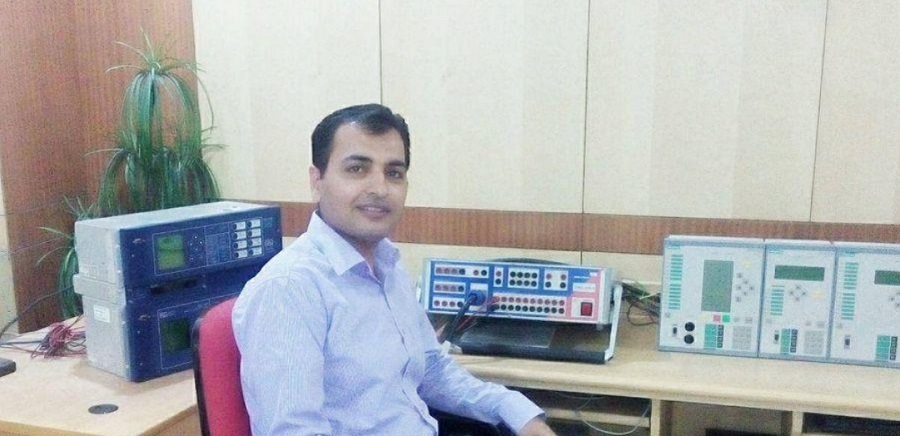
Omicron Relay Testing and Test Universe Training
One of the most important subjects in protection relay testing is understanding how to use secondary injection test equipment.
Omicron is widely used for testing numerical protection relays in substations, power plants, and industrial electrical installations.
Engineers should become familiar with both the test equipment and the associated software.
Important subjects include:
- Omicron CMC test equipment.
- Omicron Test Universe software.
- Test Object configuration.
- Protection function testing.
- State Sequencer.
- Ramping tests.
- Overcurrent testing.
- Distance protection testing.
- Differential protection testing.
- Binary input and output testing.
- Test report generation.
Understanding the relationship between relay settings, test parameters, injected currents and voltages, and measured operating times is essential for successful testing.

MiCOM Relay Testing and MiCOM Relay Training
MiCOM protection relays are used in many electrical power applications, including transmission lines, transformers, generators, and motors.
Engineers working with MiCOM relays should understand their protection functions, configuration software, and testing procedures.
Common MiCOM relay families include:
- MiCOM P12x – Overcurrent protection.
- MiCOM P14x – Feeder protection.
- MiCOM P44x – Distance protection.
- MiCOM P63x – Transformer protection.
- MiCOM P34x – Generator protection.
MiCOM relay testing involves verifying the configured protection functions using secondary injection equipment and checking the corresponding trip and alarm logic.
A practical MiCOM relay training program should combine protection theory, relay configuration, setting calculations, and testing procedures.

ABB Relay Course and ABB Protection Relay Testing
ABB protection relays are widely installed in industrial facilities, substations, and power generation systems.
ABB Relion protection and control relays provide various protection functions for electrical equipment.
Popular ABB relay families include:
- REF615 – Feeder protection.
- RET615 – Transformer protection.
- REM615 – Motor protection.
- RED615 – Line differential protection.
- REL670 – Line protection.
- RET670 – Transformer protection.
An ABB relay course should explain protection functions, configuration tools, relay setting parameters, and practical testing procedures.
Engineers should also understand how to verify protection characteristics and trip logic using secondary injection test equipment.
GE Relay Training and SEL Relay Training Courses
Apart from Siemens, MiCOM, and ABB, engineers frequently work with GE and SEL protection relays.
GE Relay Training
GE Multilin protection relays are used in various applications, including transformer, generator, motor, feeder, and transmission line protection.
Important topics include:
- GE Multilin relay configuration.
- Protection function settings.
- Communication configuration.
- Event and fault record analysis.
- Secondary injection testing.
- Trip logic verification.

SEL Relay Training Courses
Schweitzer Engineering Laboratories (SEL) develops protection, automation, and control equipment used in electrical power systems.
Examples of SEL protection relays include:
- SEL-751 – Feeder protection.
- SEL-421 – Distance protection.
- SEL-487E – Transformer protection.
- SEL-787 – Transformer protection.
- SEL-700G – Generator protection.
A comprehensive SEL relay training course should cover relay configuration, protection settings, event analysis, communication, and practical testing.
Relay Programming Course – What Should You Learn?
Modern numerical protection relays are programmable devices. They provide configurable protection functions, logic, communication, and control capabilities.
A relay programming course should explain how to configure and modify relay functions according to the protection requirements of an electrical installation.
Important subjects include:
- Relay configuration software.
- Protection setting configuration.
- Programmable logic.
- Binary input and output configuration.
- Trip and alarm logic.
- Protection function enable/disable.
- Communication parameters.
- IEC 61850 configuration.
- GOOSE messaging.
- Event and disturbance record configuration.
For Siemens SIPROTEC 5 relays, for example, engineers use DIGSI 5 to configure protection functions, logic, hardware, and communication parameters.
Understanding relay programming is especially important for engineers involved in protection design, commissioning, maintenance, and troubleshooting.
Relay Testing and Commissioning Training PDF
Many engineers search for relay testing and commissioning training PDF because they want technical documents that can be used as references during practical work.
Useful PDF training materials include:
- Protection relay testing procedures.
- Secondary injection testing guidelines.
- CT and VT testing documents.
- Overcurrent relay testing procedures.
- Distance relay testing examples.
- Transformer differential protection testing.
- Relay commissioning checklists.
- Protection relay setting calculation examples.
- Omicron Test Universe tutorials.
- Protection relay troubleshooting guides.
PDF documents are particularly useful during commissioning because engineers can refer to testing procedures and checklists while working at substations and power plants.
However, PDF documents alone cannot replace practical experience. Engineers should combine technical documentation with software demonstrations and actual testing exercises.
Elec-Engg provides technical learning resources and practical training materials for protection engineers. The Relay Testing and Commissioning course includes more than 130 PDF documents to support the recorded lessons.
Free Relay Testing Training – Where Can You Start?
Engineers searching for free relay testing training or protective relay training online free can start with publicly available technical resources.
Useful free learning sources include:
- Protection relay manufacturer application guides.
- Technical manuals and relay instruction books.
- Omicron application notes.
- Protection engineering articles.
- Free technical webinars.
- Sample training videos.
- Publicly available commissioning documents.
You can also explore the technical articles and updates published on Elec-Engg.
Free resources are a good starting point for understanding protection principles. However, comprehensive relay testing requires practical demonstrations, test equipment knowledge, and structured exercises.
If you are new to protection engineering, start with basic protection principles before moving to numerical relay configuration and commissioning tests.
Relay Testing and Commissioning Training Cost
The cost of relay testing and commissioning training depends on several factors.
These include:
- Training duration.
- Online or face-to-face delivery.
- Number of participants.
- Practical testing equipment availability.
- Training location.
- Relay manufacturers covered.
- Customized training requirements.
- Training materials and certificates.
Online recorded courses are generally more flexible and economical than customized classroom or face-to-face training.
For companies, customized training may be arranged according to the installed protection relay types and the technical requirements of their engineers.
When comparing relay testing and commissioning training cost, consider the practical value of the training rather than comparing course prices alone.
A course covering protection principles, relay configuration, Omicron testing, and commissioning procedures can provide more value than a course focusing only on theoretical presentations.
For current course fees and available training options, visit:
13. Relay Testing and Commissioning Training Near Me
Many engineers search for relay testing training near me, protective relay training online near me, or classroom training in their country.
Face-to-face training is useful when engineers need direct interaction with instructors and practical access to testing equipment.
However, online training provides an alternative for engineers who cannot find suitable local training centres.
Elec-Engg provides online technical training for international participants, allowing engineers to study from different countries without travelling to a training location.
The online learning approach is suitable for engineers in:
- India.
- Germany.
- United States.
- United Kingdom.
- Middle East.
- Southeast Asia.
- Other countries with electrical power and industrial sectors.
For engineers searching specifically for relay testing and commissioning training in India, online training can also provide access to international technical instruction without geographical limitations.
For engineers searching for relay testing and commissioning training in Texas, online courses are another option when local classroom schedules or specialized training facilities are not convenient.
Relay Training Education – Who Should Attend?
Relay testing and commissioning training is useful for professionals involved in the design, operation, maintenance, and commissioning of electrical power systems.
The target participants include:
- Protection engineers.
- Electrical commissioning engineers.
- Relay testing engineers.
- Electrical maintenance engineers.
- Substation engineers.
- Power plant engineers.
- Electrical technicians.
- EPC contractors.
- Utility engineers.
- Industrial electrical engineers.
Basic knowledge of electrical circuits, three-phase systems, transformers, and electrical protection is recommended.
For beginners, it is better to start with protection relay fundamentals before attending advanced relay testing and commissioning training.
What Does Relay Training Mean?
Relay training refers to technical education focused on the operation, configuration, testing, maintenance, and troubleshooting of electrical protection relays.
Depending on the course level, relay training can include:
Basic level: Introduction to electrical protection, CTs, VTs, circuit breakers, and protection relay principles.
Intermediate level: Numerical relay configuration, protection settings, and testing of common protection functions.
Advanced level: Differential and distance protection testing, programmable logic, IEC 61850 communication, and complex commissioning procedures.
The objective is to develop the practical skills required to work confidently with modern protection systems.
Protection Relay Certification and Training Certificates
A protection relay training certificate can help demonstrate that an engineer has completed a technical training program and achieved the required course assessment results.
Before enrolling, check whether the provider offers:
- A structured training program.
- Technical assessments or quizzes.
- Practical training exercises.
- A completion certificate.
- A verifiable certificate identification system.
A course completion certificate should not automatically be considered an internationally accredited or manufacturer-authorized certification. Engineers should verify the issuing organization’s accreditation if formal professional recognition is required.
Elec-Engg provides course assessments and certificates for eligible training courses. Participants must meet the course assessment requirements to obtain their certificate.

How to Choose the Best Relay Testing Course?
Before selecting a relay testing course, consider the following questions:
- Does the course explain protection relay operating principles?
- Does it include practical secondary injection testing?
- Does it cover Omicron Test Universe?
- Are different protection functions demonstrated?
- Does it include actual relay configuration examples?
- Are technical PDF documents provided?
- Can you access the course online?
- Does the course include assessments and a certificate?
- Is the training suitable for your current technical level?
The best relay testing training is one that connects protection theory with real commissioning and testing activities.
Frequently Asked Questions (FAQ)
1. Where can I find relay testing and commissioning training online?
You can find online relay testing and commissioning courses through specialized electrical engineering training platforms. Elec-Engg provides practical recorded training covering protection relay testing and commissioning, including Omicron Test Universe applications.
2. Is there any free relay testing training available?
Yes. You can start with free manufacturer manuals, technical application guides, webinars, and publicly available training videos. These resources are useful for learning the fundamentals, although comprehensive practical training may require a structured course.
3. What is included in a relay testing and commissioning course?
A comprehensive course generally covers protection relay fundamentals, CT and VT circuits, secondary injection testing, overcurrent protection, earth fault protection, differential protection, distance protection, trip circuit verification, and commissioning procedures.
4. Which software is used for relay testing?
Omicron Test Universe is one of the commonly used software platforms for protection relay testing. Other manufacturer-specific tools are used for relay configuration and analysis, including DIGSI 5, PCM600, MiCOM S1 Agile, and SEL AcSELerator.
5. Do I need an Omicron test set to learn relay testing?
You do not necessarily need to own an Omicron test set to start learning. You can study protection principles, testing procedures, software configuration, and practical demonstrations through online training. However, hands-on experience with secondary injection equipment is important for developing commissioning skills.
6. Can beginners attend protection relay training?
Yes. Beginners can attend protection relay training, but a basic understanding of electrical engineering, three-phase systems, transformers, and circuit breakers is recommended.
7. What is the difference between relay testing and relay commissioning?
Relay testing verifies the operation and performance of individual protection functions and associated circuits. Commissioning is a broader process that includes inspection, configuration verification, testing, trip circuit checks, communication checks, documentation, and final acceptance before placing the protection system into service.
8. Is MiCOM relay training different from ABB or SEL relay training?
The basic protection principles are similar, but the relay configuration software, operating characteristics, terminology, communication features, and testing procedures can differ between manufacturers.
9. How long does relay testing training take?
The duration depends on the course content and level. Basic training may take a few hours, while comprehensive relay testing and commissioning courses can require several days or more of study and practical exercises.
10. Can I get a relay testing training PDF?
Yes. Training providers and manufacturers offer technical PDF documents, application notes, commissioning procedures, and testing guidelines. Elec-Engg’s Relay Testing and Commissioning course includes more than 130 PDF documents.
11. Is there relay testing and commissioning training in India?
Engineers in India can attend local classroom programs or choose international online training. Online training provides flexibility to study without travelling to a training centre.
12. What is the difference between relay testing training and relay programming training?
Relay testing training focuses on verifying the performance of protection functions using test equipment. Relay programming training focuses on configuring protection functions, logic, inputs, outputs, and communication parameters. Both are important for protection and commissioning engineers.

Start Learning Protection Relay Testing and Commissioning
Developing practical relay testing skills is essential for engineers working in electrical substations, power plants, transmission networks, and industrial facilities.
Whether you are looking for a relay testing course, MiCOM relay training, ABB relay course, GE relay training, SEL relay training courses, or comprehensive protective relay training online, focus on training that combines theoretical knowledge with practical engineering applications.
Elec-Engg provides practical electrical engineering training by Dr. Saeed Roostaee, covering power system protection, protection relay configuration, testing, commissioning, and substation automation.
Explore the Relay Testing and Commissioning course and other protection relay training programs:
https://elec-engg.com/courses/relay-testing-and-commissioning
Learn. Practice. Improve your engineering skills.