

Line protection is a fundamental part of power system protection, designed to detect and isolate faults on transmission and distribution lines. It protects overhead lines and underground cables against faults while maintaining the stability and continuity of the power system. Common line protection functions include:
Line protection function reference (ANSI)
| ANSI | Function | Application |
|---|---|---|
| 21 | Distance | Phase and ground fault distance protection |
| 21N | Ground distance | Earth fault detection |
| 50 | Instantaneous overcurrent | High-current fault detection |
| 51 | Time overcurrent | Coordinated backup protection |
| 67 | Directional overcurrent | Direction-sensitive fault protection |
| 67N | Directional earth fault | Ground fault direction |
| 87L | Line differential | Internal line fault detection |
| 79 | Auto-reclosing | Reclose after temporary faults |
| 25 | Synchronism check | Safe reclosing |
| 85 | Teleprotection | Communication-assisted protection |
| 50BF | Breaker failure | Backup tripping |
| 68 | Power swing blocking | Prevent unwanted distance trips |
| 78 | Out-of-step | Power swing / loss of synchronism |
| 74 | Alarm / trip supervision | Monitoring of trip circuits or relay logic, implementation-dependent |
| 46 | Negative sequence | Unbalanced current detection |
| 27 | Undervoltage | Voltage supervision / backup |
| 59 | Overvoltage | Voltage backup protection |

Protection Relay type quick comparison
| Protection type | ANSI | Typical relay models |
|---|---|---|
| Distance protection | 21 | 7SA, REL670, SEL-421, D60, P443 |
| Line differential | 87L | RED670, 7SD, SEL-411L, L90, P54x |
| Combined distance + differential | 21 + 87L | 7SL82, 7SL86, 7SL87 |
| Overcurrent | 50/51 | 7SJ, REF615, SEL-751, F60 |
| Directional overcurrent | 67 | 7SJ, REF615, SEL, Easergy P3 |
| Auto-reclosing | 79 | 7SA, REL670, SEL, MiCOM |
| Teleprotection | 85 | 7SA, 7SL, REL670, SEL-421, P44x |
| Breaker failure | 50BF | Most modern line protection IEDs, depending on configuration |
At Elec-Engg, we provide practical training on line protection, relay operation, protection settings, fault analysis, testing, commissioning, and troubleshooting using real-world engineering examples and software tools.
Line Protection Posts
Line
SIFANG CSC-101 Line Distance Protection
SIFANG CSC-103 Line Differential Protection
SIFANG CSC-150 Busbar Protection
GE Multilin Distance Protection (ANSI 21): D60 and D30 Relays, Impedance Zones, Mho and Quadrilateral Characteristics, Load Encroachment and Testing
GE Multilin Line Differential Protection (ANSI 87L): L90 Relay, Differential Principles, Communication Channels, CT Saturation and Testing
MiCOM P547 Phase Comparison Protection Relay: Functions, Settings & Testing
MiCOM P52x, P53x & P54x Line Differential Relays: Functions, Settings & Testing
MiCOM P44x Distance Protection Relays: P441–P448 Functions, Settings & Testing
Siemens SIPROTEC 5 7SL Relays: 7SL82, 7SL86 & 7SL87 Combined Protection
Siemens SIPROTEC 5 7SD Line Differential Protection: 7SD82, 7SD86 & 7SD87
Siemens SIPROTEC 5 7SA Distance Protection Relays: 7SA82, 7SA86 & 7SA87
Siemens SIPROTEC 4 7SD Line Differential Relays: 7SD5, 7SD52, 7SD53, 7SD61 & 7SD610
Siemens SIPROTEC 4 7SA6 Distance Protection Relay: Complete Guide
ABB REL650 Line Distance Protection Relay – Complete Technical Guide
ABB REL650 Line Distance Protection Relay – Complete Technical Guide
ABB REL670 Distance Protection Relay – Complete Technical Guide
ABB RED670 Line Differential Protection Relay – Complete Technical Guide
SEL-311C Relay: Distance Protection, POTT, Settings & Testing
SEL-321 Relay: Distance Protection, POTT, Settings and Testing
SEL-387L Relay: 87L Line Differential Protection, Applications & Testing
SEL-311L Relay: 87L Differential Protection, Settings and Testing
SEL-421 Relay: Distance Protection, Settings, POTT and Testing
SEL-421 Relay: Distance Protection, Settings, POTT & Testing
SEL-311L Relay: 87L Line Differential, Distance Protection & Settings
SEL-787L Relay: Line Differential Protection 87L, Settings and Testing
SEL-411L Relay: Line Differential 87L, Distance Protection and Settings
SEL-411L Relay: Line Differential 87L, Distance Protection and Settings
NARI Line Protection
Sepam Line Protection, Distance Protection, Line Differential
SIPROTEC 5 7SA8 Training Course
SEL-421 Training
Load Blinders
Line protection with SIPROTEC 7SA8
Line Differential with SIPROTEC 7SD8
Line Protection IED CSC-103
Transmission Line protection principles
IEEE Guide for Protective Relay Applications to Transmission Lines
ABB REL 670 Line Protection Testing
Protection Setting Calculation
Sample Calculation of Relay Setting of P543
Transmission Line protection training
Relay Settings Calculations
Advance Distance Protection
SEL-T400L
SEL 421 wiring connection
Distance protection relays (ANSI 21)
| Manufacturer | Relay model / series | Typical application |
|---|---|---|
| Siemens | SIPROTEC 7SA522 | Distance protection |
| Siemens | SIPROTEC 7SA6 | Transmission line protection |
| Siemens | SIPROTEC 7SA82 | Distance protection |
| Siemens | SIPROTEC 7SA86 | Advanced distance protection |
| Siemens | SIPROTEC 7SA87 | Distance protection |
| Siemens | SIPROTEC 7SA511 | Distance protection |
| ABB / Hitachi Energy | REL670 | Transmission line protection |
| ABB / Hitachi Energy | REL650 | Distance protection |
| ABB / Hitachi Energy | REL641 | Line protection |
| SEL | SEL-421 | Distance protection |
| SEL | SEL-421-7 | Advanced line protection |
| SEL | SEL-321 | Distance protection |
| SEL | SEL-311C | Line protection |
| GE | Multilin D60 | Distance protection |
| GE | Multilin D90 | Distance protection |
| Schneider / MiCOM | P442 | Distance protection |
| Schneider / MiCOM | P443 | Distance protection |
| Schneider / MiCOM | P444 | Distance protection |
| Schneider / MiCOM | P445 | Distance protection |
| Schneider / MiCOM | P446 | Distance protection |
| Toshiba | GRZ100 | Distance protection |
| NR Electric | PCS-902 | Distance protection |
| Sifang | CSC-101 | Distance protection |
Line differential protection relays (ANSI 87L)
| Manufacturer | Relay model / series | Typical application |
|---|---|---|
| Siemens | SIPROTEC 7SD52 / 7SD53 | Line differential protection |
| Siemens | SIPROTEC 7SD61 | Line differential |
| Siemens | SIPROTEC 7SD80 | Line differential |
| Siemens | SIPROTEC 7SD82 | Line differential |
| Siemens | SIPROTEC 7SD87 | Advanced line differential |
| Siemens | SIPROTEC 7SL82 | Combined differential and distance |
| Siemens | SIPROTEC 7SL86 | Multi-terminal line differential and distance |
| Siemens | SIPROTEC 7SL87 | Multi-terminal differential and distance |
| ABB / Hitachi Energy | RED670 | Transmission line differential |
| ABB / Hitachi Energy | RED650 | Line differential protection |
| ABB / Hitachi Energy | RED615 | Line differential protection |
| SEL | SEL-411L | Line differential and distance |
| SEL | SEL-311L | Line differential |
| SEL | SEL-387L | Line differential |
| GE | Multilin L90 | Line differential |
| GE | Multilin L60 | Line differential |
| Schneider / MiCOM | P521 | Line differential |
| Schneider / MiCOM | P530C | Line differential |
| Schneider / MiCOM | P532 | Line differential |
| Schneider / MiCOM | P541–P546 | Line differential, distance options |
| Toshiba | GRL100 / GRL150 | Line differential |
| Toshiba | GRL200 | Fiber-optic line differential |
| NR Electric | PCS-931 / PCS-932* | Line differential family; verify exact variant |
| Sifang | CSC-103 | Line differential |
*Confirm the exact model suffix and available functions against the manufacturer’s datasheet and hardware configuration.
Current Siemens SIPROTEC 5 includes combined differential and distance options such as 7SL82, 7SL86, and 7SL87. Schneider’s current line differential product families include P53x and P54x. Siemens+2
Combined distance + line differential relays
| Manufacturer | Relay model | Main features |
|---|---|---|
| Siemens | 7SL82 | Distance + line differential |
| Siemens | 7SL86 | Multi-terminal line differential + distance |
| Siemens | 7SL87 | Line differential + distance |
| SEL | SEL-411L | Differential + distance protection |
| SEL | SEL-421 | Distance, backup, control, reclosing |
| GE | Multilin L90 | Line differential; application-specific backup |
| Schneider | MiCOM P54x | Differential with distance backup options |
| ABB / Hitachi Energy | RED670 | Line differential and configurable backup functions |
Feeder and backup line protection relays
These relays are commonly used for distribution lines, radial feeders, backup protection, and some sub-transmission applications depending on network design.
| Manufacturer | Relay model | Typical application |
|---|---|---|
| Siemens | 7SJ62 | Feeder protection |
| Siemens | 7SJ63 | Feeder protection |
| Siemens | 7SJ64 | Feeder protection |
| Siemens | 7SJ80 | Feeder protection |
| Siemens | 7SJ82 | Feeder protection |
| Siemens | 7SJ85 | Advanced feeder protection |
| Siemens | 7SX82 | Universal MV protection |
| ABB | REF615 | Feeder protection |
| ABB | REF620 | Feeder protection |
| ABB | REF630 | Feeder protection |
| ABB | REF640 | Feeder protection |
| ABB | REF650 | Feeder protection |
| ABB | REF601 | Feeder protection |
| SEL | SEL-751 | Feeder protection |
| SEL | SEL-351 | Feeder protection |
| SEL | SEL-451 | Feeder / line protection |
| GE | Multilin F60 | Feeder protection |
| GE | Multilin 850 | Feeder protection |
| Schneider | MiCOM P123 | Overcurrent protection |
| Schneider | MiCOM P127 | Overcurrent protection |
| Schneider | Easergy P3 | Feeder protection |
| Schneider | Easergy P5 | MV protection |
| VAMP | VAMP 50 / 55 | Feeder protection |
| VAMP | VAMP 200 series | Protection and control, model-dependent |
Other manufacturers and line protection relay models
| Manufacturer | Relay model | Protection / application |
|---|---|---|
| Toshiba | GRZ100 | Distance protection |
| Toshiba | GRL100 | Line differential |
| Toshiba | GRL150 | Line differential |
| Toshiba | GRL200 | Line differential |
| Toshiba | GRW200 | Line differential |
| NR Electric | PCS-902 | Distance protection |
| NR Electric | PCS-902S | Distance protection |
| NR Electric | PCS-931 | Line differential family — verify model |
| Sifang | CSC-101 | Distance protection |
| Sifang | CSC-103 | Line differential protection |
| Ingeteam | INGEPAC EF ZT | Distance protection |
| Protecta | EuroProt+ DTVA-E1 | Distance protection |
| Ashida | ADR series | Distance / line protection, model dependent |
| Alstom | MiCOM P44x | Distance protection (legacy product family) |
| Areva | MiCOM P44x | Distance protection |
| GE | MiCOM P44x | Distance protection, legacy and current portfolio variants |
Some MiCOM product families have changed ownership, branding, or availability over time. Always confirm the relay’s exact manufacturer, model, hardware version, and firmware.
PDF Files
- Line Diff Part 1
- Line Diff Part 2
- Line Diff Part 3
- Line Diff Part 4
- Line Diff Part 5
- Distance Protection Calculations
- OUT-OF-STEP PROTECTION FUNDAMENTALS AND ADVANCEMENTS
- Relay Settings Calculations
- Distance Protection
- Line Technical Library including these PDF: Presentation_Distance_Protection.pdf ; DP Schemes.pdf; Line Differential Protection.pdf; Dist_RMD_Classic.pdf; IEEE Guide for Determining Fault Location on AC Transmission and Distribution Lines.pdf; IEEE Guide for Protective Relay Applications to Transmission Lines.pdf; DistanceRelays101.pdf; 400KV PROTECTION.pdf; Ground Fault Protection of Transmission LINE.pdf; DistanceRelay_Web.pdf; Numerical Distance Protection Relay.pdf; Setting sample.pdf; AP DIS Distance Protection REF 542plus.pdf; APDIS1.Numerical Distance Protection-G. Ziegler-2011.pdf; App_diff_0002_01_ComPDI_CC_CU_en.pdf; Calculation of Distance Protection Settings.pdf / Causes-and-effects-of-faults-in-overhead-transmission-lines.pdf / Centralized-fault-locating-system-in-Vietnam-power-grid.pdf / Application_of_Overreaching_Distance _Relay.pdf // DISTANCE PROTECTION BASICS & CHARACTERISTICS.pdf /Distance Protection.pdf / EL Relay Settings.pdf / Line differential settings for a two terminal 7SD-APPLICATION NOTE.pdf / M 7SA 7SA6xx_Manual.pdf / M SIP5_7SA-SD-SL-VK-87.pdf / M TRM_REL670 .pdf / Model Setting Calculation for Typical IEDs Used for Transmission Line Protection.pdf / MT_EXT_NOTIFICATION.pdf / OUT-OF-STEP PROTECTION FUNDAMENTALS.pdf / PLCC FOR TRANSMISSION LINE RELAYING.pdf/ Power Swing Phenomena and its Detection and Prevention.pdf / powerswing SEL.pdf / Protection of Transmission LINE.pdf / Relay Settings.pdf/ Resistive reach setting of QUAD relays.pdf/ SOTF.pdf/ / Switch onto Fault Protection.pdf/ Tutoiral on Distance and OC protection.pdf/ Verification of Distance Protection Application with Scheme Communication.pdf / X R.pdf / Zero Seq Mutual Induction in Dbl Ckt Lines.pdf/ ZERO-SETTING POWER-SWING BLOCKING PROTECTION.pdf /
Excel File
Line Protection With SIPROTEC 7SA8 by: Dr. Saeed Roostaee
Line Protection Fundamentals [1h 54m]
- Transmission line faults and overcurrent problems
- Why distance protection is required
- Distance protection basic principles
- Fault resistance and infeed effects
- MHO and quadrilateral characteristics
- Direction determination and six-loop measurement
- Load and fault areas on the R–X plane
- Stepped distance protection and zone inclination
- Classic and RMD distance methods
- Teleprotection overview and configuration
- Switch-on-to-fault (SOTF)
- Auto-reclosing, stub protection, power swing blocking
02 — SIPROTEC 5 7SA8 Configuration [ 1h 12m ]
- Basic SIPROTEC 5 7SA template
- RMD configuration
- Configuration in 1.5 circuit-breaker arrangements
- Practical case study
- Protection function configuration
- Signals, logic, and function mapping
Distance Protection [ 2h 12m ]
- Distance protection for grounded systems
- Distance protection structure
- Ground-fault detection logic
- 3I0, 3I0/3I2, and V0 supervision
- Pickup methods: impedance, overcurrent, V/I, V/I φ
- Distance zones and loop selection
- Direction determination
- Quadrilateral, MHO, and circular characteristics
- Operating curves and output logic
Line Function Group [ 1h 06m ]
- Function group structure
- Operational measured values
- Line data and operational measurements
- Power-related measured and statistical value inversion
- Kr, Kx, R0, X0, R1, X1 parameters
- CT saturation detection
- Series compensation
- Process monitoring and current-flow criteria
- Circuit-breaker condition and closure detection
- One-pole open detector and voltage criteria
- Cold-load pickup detection
- Function group output logic
Teleprotection [ 1h 12m ]
- Purpose and principles of teleprotection
- PUTT – Permissive Underreach Transfer Trip
- DUTT – Direct Underreach Transfer Trip
- POTT – Permissive Overreach Transfer Trip
- Teleprotection with ground-fault protection
- 85-67N transient blocking
- Echo logic and weak-infeed tripping
- Weak-infeed detection and configuration
- SOTF and instantaneous tripping logic
- Power swing blocking
- Trajectory monotony, continuity, and uniformity
Automatic Reclosing (79 / AR)
- Automatic reclosure function and parameters
- Dead time and reclaim time
- AR start and blocking signals
- Multi-shot auto-reclosing
- Operating modes and action time
- Circuit-breaker readiness supervision
- Manual close blocking time
- Start signal supervision time
- Three-pole operation by AR
- Evolving fault detection
- Response to evolving faults
- Dead time after evolving faults
- Signals between protection and AR functions
- Cyclic automatic reclosing operation
Synchronism Check (ANSI 25)
- Synchronization principles
- Switching synchronous power systems
- Switching asynchronous power systems
- Dead-line and dead-busbar closing
- Line and busbar synchronization with 4 voltage inputs
- Line and busbar synchronization with 6 voltage inputs
- Synchronism-check closing conditions
- Sync condition indications
- Minimum and maximum operating limits
- Transformer applications between feeder and bus VT
- Transformer angle adjustment
- Maximum synchronization process duration
- Direct close command and operating range
- Synchronous/asynchronous operating stages
7SA8 Testing & Commissioning
- SIPROTEC 5 7SA8 distance protection testing
- Relay testing procedures
- Drawing distance protection characteristics
- RIO and XRIO concepts
- Distance RIO parameters
- Testing relay operation and characteristics
- Practical testing concepts using PTL
- Commissioning and verification considerations
Line Protection Gallary:


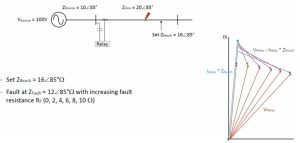


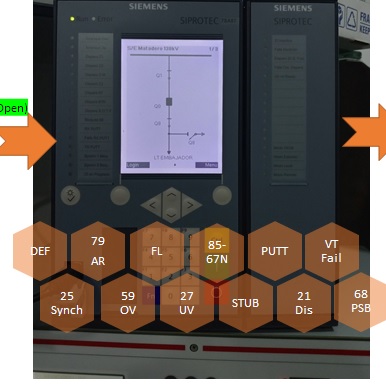


Line Protection Functions:
Line Protection is a critical part of Power System Protection, covering Transmission Line Protection and Distribution Line Protection to ensure reliable, selective, and fast fault detection and isolation. Modern protection schemes include Distance Protection, Line Differential Protection, Overcurrent Protection, Directional Overcurrent Protection, Teleprotection, Auto Reclosing, Line Differential Relay, and Distance Relay applications. This technical collection covers Protection Relay operation, Line Protection Settings, Fault Analysis, Relay Testing, Relay Commissioning, IEC 61850, and Substation Automation, featuring Siemens Protection Relays such as SIPROTEC 7SA, SIPROTEC 7SD, SIPROTEC 7SD8, SIPROTEC 7SA82, SIPROTEC 7SA87, SIPROTEC 7SD87, and SIPROTEC SD; ABB Protection Relays including ABB REL670, ABB RED670, ABB RED615, ABB RED650, and ABB RET670; SEL-421, SEL-411L, SEL-311L from SEL Protection Relays; GE L90 and GE D60 from GE Protection Relays; MiCOM P442, MiCOM P443, MiCOM P445, and MiCOM P446; Schneider Easergy; and VAMP Relays. Explore practical engineering resources, relay manuals, protection diagrams, configuration guides, testing procedures, commissioning examples, and training materials for modern transmission and distribution line protection systems.
- Distance Protection (21): Detects faults based on impedance measured from the relay location.
- Overcurrent Protection (50/51): Provides instantaneous and time-delayed fault protection.
- Directional Overcurrent (67): Detects fault current direction to improve selectivity.
- Differential Protection (87L): Compares currents at both ends of the protected line.
- Auto-Reclosing (79): Automatically restores the line following temporary faults.
- Teleprotection: Enables fast protection tripping using communication channels between substations.
Modern line protection relays combine protection, control, monitoring, fault recording, communication, and IEC 61850 capabilities to provide reliable and fast fault clearance.